
Introduction: A Hard Truth Marketers Must Accept in 2026
Social media lead generation was once the most reliable growth engine for businesses across industries. A few ads, a simple landing page, and leads would flow in consistently. But in 2026, that model is breaking down—fast.
Businesses are spending more, converting less, and questioning whether social platforms still work for lead acquisition. The reality is not that social media is dead—it’s that old lead generation methods no longer align with modern user behavior.
In this article, we’ll break down why social media lead generation is failing in 2026 and, more importantly, how you can fix it quickly using strategies that match today’s algorithms, audiences, and trust signals.
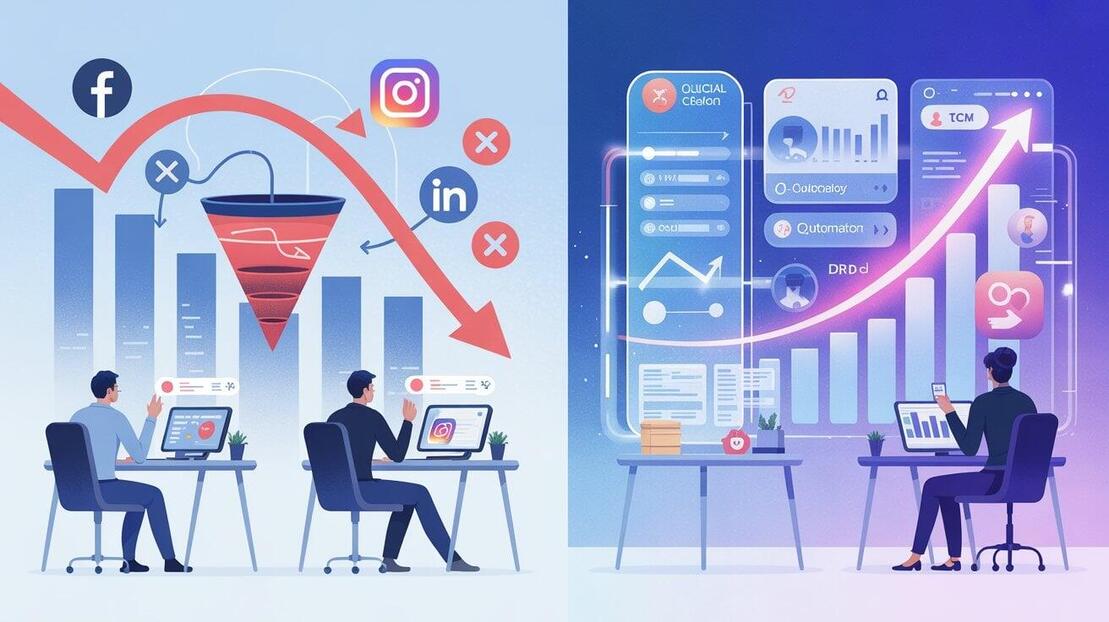
Why Social Media Lead Generation Is Breaking Down
1. Audience Trust Is at an All-Time Low
Users in 2026 are smarter, more skeptical, and overwhelmed by ads. They’ve seen too many exaggerated promises, fake testimonials, and low-quality offers.
If your ads feel salesy or generic, people scroll past instantly. This trust deficit is one of the biggest reasons social media lead generation campaigns underperform today.
What changed:
Users research brands before submitting forms
Reviews and social proof matter more than discounts
Transparency is expected, not optional
2. Rising Ad Costs Are Killing ROI
Advertising costs on platforms like Meta, Instagram, and LinkedIn have increased significantly. The days of cheap leads are over.
Many businesses are still using outdated funnels that cannot sustain higher CPCs, leading to:
Poor cost per lead
Low-quality inquiries
Negative return on ad spend
Without funnel optimization, spending more simply amplifies failure.
3. Poor Lead Quality Is Wasting Sales Teams’ Time
Another major issue is unqualified leads. Forms are easy to submit, but intent is often missing.
This happens when:
Ads target broad audiences
Lead forms lack qualification steps
Messaging attracts curiosity, not buyers
As a result, sales teams lose confidence in marketing-generated leads.
Social Media Lead Generation Mistakes Businesses Keep Repeating
4. Using the Same Strategy for Every Platform
Each platform has a unique user mindset:
Instagram users scroll for inspiration
Facebook users seek community and updates
LinkedIn users expect professional value
Yet many brands run identical campaigns everywhere. This mismatch reduces engagement and conversion potential.
5. Ignoring the Full Customer Journey
Most campaigns push users directly from ad to form, skipping critical trust-building stages.
Modern buyers need:
Educational content
Proof of expertise
Clear value before commitment
Skipping these steps makes social media lead generation feel pushy rather than helpful.
How to Fix Social Media Lead Generation Fast in 2026
6. Shift From “Lead Capture” to “Lead Nurture”
Instead of asking for contact details immediately, focus on value-first interactions.
Effective approaches include:
Free tools or calculators
Short educational videos
Downloadable checklists or guides
Once trust is established, lead capture becomes natural.
7. Use Multi-Step Funnels, Not Single Forms
High-performing funnels in 2026 are multi-step:
Awareness content
Engagement or micro-conversion
Qualification step
Lead capture
This structure filters low-intent users and improves overall lead quality.
8. Improve Targeting With Intent-Based Signals
Interest targeting alone is no longer enough.
Winning campaigns use:
Website retargeting
Video engagement audiences
CRM-based lookalike data
These signals indicate real buying intent and dramatically improve social media lead generation performance.
Content Is Now the Real Conversion Engine
9. Educational Content Converts Better Than Ads
In 2026, ads work best when they don’t feel like ads.
High-converting formats include:
Short explainer videos
Problem–solution reels
Industry-specific case studies
Content that educates positions your brand as an authority, not a seller.
10. Personalization Is No Longer Optional
Generic messaging fails because users expect relevance.
Personalized campaigns based on:
Location
Industry
Business size
User behavior
deliver significantly higher engagement and conversion rates.
Measuring What Actually Matters
11. Stop Optimizing for Leads—Optimize for Revenue
Many marketers still optimize campaigns for cost per lead. In 2026, this metric alone is misleading.
Instead, track:
Lead-to-sale conversion rate
Cost per qualified lead
Customer acquisition cost
This mindset shift instantly improves campaign decision-making.
The Future of Social Media Lead Generation
12. Automation + Human Touch Wins
Automation tools help scale campaigns, but human interaction builds trust.
Winning brands combine:
Automated follow-ups
WhatsApp or email nurturing
Real human conversations
This hybrid approach restores confidence in social media lead generation as a growth channel.
Conclusion: Fix the Strategy, Not the Platform
Social media isn’t failing—outdated strategies are.
In 2026, success comes from:
Trust-first marketing
Intent-driven targeting
Value-based content
Smarter funnel design
Businesses that adapt quickly will not only recover lost performance but outperform competitors still relying on old tactics.
If you want social media lead generation to work again, the solution is clear: evolve with your audience, not against them.